



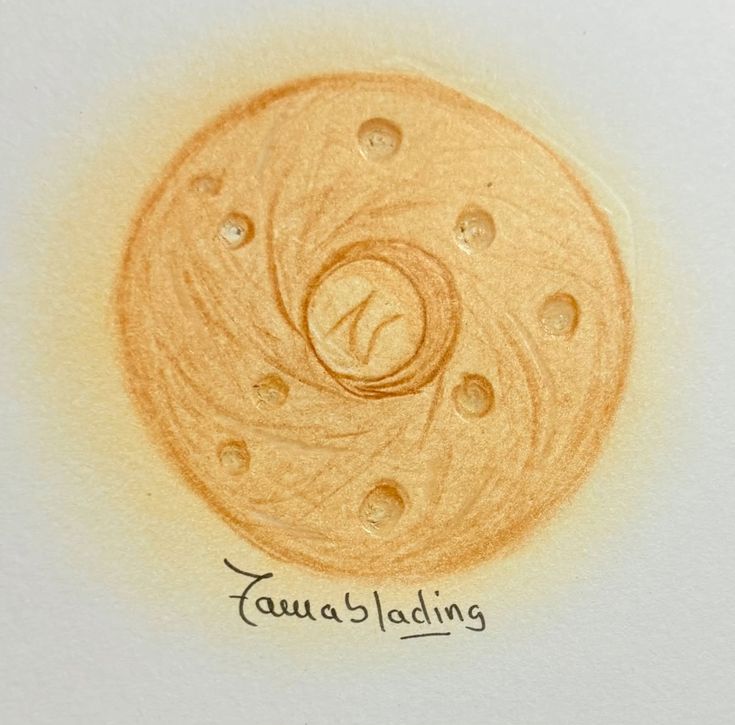
Optical illusion tattoos—known in fine art as trompe-l’œil (French for “deceive the eye”)—exploit the way the human brain processes visual information. Because 3d areola tattoo phoenix ink sits on a single flat plane inside the dermis, physical depth does not exist on the skin. Instead, tattoo artists use principles of neuroscience, optics, and geometry to trick the visual cortex into perceiving recessed cavities, floating objects, or distorted anatomy.
1. How the Brain Decodes Three-Dimensional Space
The human eye captures two-dimensional images on the retina, and the brain reconstructs a three-dimensional world using learned visual cues called monocular depth cues. 3D tattoo artists deliberately manipulate these cues to override the viewer’s awareness that they are looking at flat skin:
-
Aerial and Tonal Perspective: In the physical world, light scatters across distances, making nearby objects appear high-contrast and sharp while distant objects look darker, softer, and muted. Artists pack dense black ink into recessed areas to push them visually backward and place bright highlights on foreground edges to pull them forward.
-
Occlusion (Overlapping Planes): When one object partially blocks another, the brain automatically registers the blocking object as closer. By layering petals, mechanical gears, or geometric blocks with crisp overlapping edges, artists establish instant spatial hierarchy.
-
Figure-Ground Segregation: Traditional tattoos separate the image from the skin using a thick black outline. Optical illusion tattoos remove outlines entirely, forcing the brain to rely on shadow gradients and edge contrast—making the boundary between ink and living flesh disappear.
2. The Physics of Light and Shadow on Skin
The human brain assumes light comes from above—a perceptual bias known as the light-from-above prior, shaped by millions of years under overhead sunlight. Tattoo artists anchor their designs to this biological expectation:
-
Detached Drop Shadows (Perceived Elevation): Placing a soft-edged, translucent greywash shadow slightly offset beneath a butterfly, spider, or floating cube creates a narrow strip of un-tattooed skin between the object and its shadow. The brain interprets this bare-skin gap as empty air, making the tattoo appear to hover millimeters above the epidermis.
-
Inverted Inner Shadows (Perceived Recession): To make a forearm or chest appear hollowed out, the artist reverses the shadow placement. When overhead light hits a cavity, the upper rim blocks the light and casts a sharp, dark shadow onto the interior wall, while the lower rim catches a bright highlight. The brain instantly reads this contrast pattern as an inward drop.
-
Reflected Light and Specular Highlights: Ambient light bounces off surrounding surfaces into shadowed areas; adding a subtle glow along the dark edge of a curved form prevents it from looking flat. Tiny dots of opaque white ink—specular highlights—mimic how light reflects off wet surfaces, glass, or polished metal.
3. Geometric Perspective and Foreshortening
Mathematical perspective allows artists to alter the perceived structure of the body itself:
-
Linear Perspective and Vanishing Points: Sunken grid tattoos, honeycomb tunnels, and impossible staircases rely on parallel lines converging toward a central vanishing point. As the geometric cells shrink and darken inward, the brain perceives a deep architectural tunnel carved into a solid limb.
-
Foreshortening: When rendering organic subjects—such as an emerging predator or a reaching hand—artists exaggerate the scale of foreground features while compressing background proportions, mimicking the depth of field of a wide-angle lens.
4. Anatomical Projection and Viewing Angles
Because human skin wraps around cylindrical limbs and flexes over joints, a 3D optical illusion behaves like an anamorphic projection—an image intentionally distorted on a curved surface so that it resolves into realistic perspective from a primary viewing angle. Skilled artists map perspective lines directly onto the client’s muscle topography (such as the deltoid, bicep, or forearm) so natural body curves reinforce rather than warp the illusion.
